Commoning the City and the Grassroots

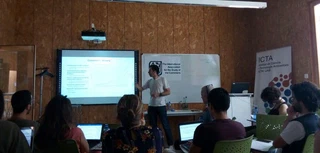 Photo: Laura Calvet-Mir
In the last decade, bottom-up initiatives of social transformation lead by urban social movements have been articulated around the notion of Urban Commons in cities across the world, and in particular, in Europe. Under the umbrella of this concept there have been developing new forms of social activism that challenge and renovate “old-style” grassroots activism (Castells, 1983). New forms based on the traditions of digital technology activism, non-urban natural resources management practices transported to urban settings and new forms of social activism such as the 15M or the Zapatista movement (Cámara, 2018).
This paper aims to shed light on how the actually existing urban commons develop and interrelate with local social movements in a novel way. It will do it by first, exploring the hybrid character of Barcelona’s urban commons through exploring their triple genealogy (digital, nature and social activism); and, second by presenting a relational analysis of the evolution of social movements behind the urban commons. With these double perspective, the paper will reflect on the articulation of the urban commons with social movements.
ICTA, Autonomous University of Barcelona (UAB)

I am an interdisciplinary researcher whose research articulates around how physical and digital infrastructures, especially those that are commonly produced, respond to and are shaped by societal challenges. I’ve worked as an architect, drupal developer, project manager, lecturer, data scientist, and currently as Principal Research Software Engineer.
My research interests revolve around the social aspect of technology and methods to surface the world-views that are invariably embedded in technical artefacts such as cities, software or platforms. To do so, I use mixed methods with a preference for digital methods, participatory methods and data visualisation and a keen interest in EDI and open research best practices to make research Findable, Accessible, Interoperable, and Reusable