The Spatial Apropriation of the Urban Commons

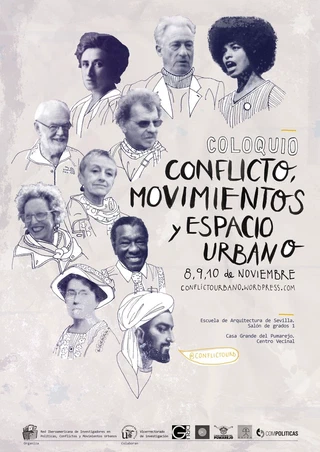
8 November 2018·
Carlos Cámara-Menoyo
· 0 min read
Poster
Abstract
Urban commons are one of the areas in which the spatiality of social movements on a local scale is most clearly evident. Although the way in which they make the appropriation of space is usually presented as a third alternative to both the market (private property / free will of the parties) and the State (public property / general interest), the fieldwork carried out between 2012 and 2016 on the main urban commons arising in Barcelona and Zaragoza as a result of the 15M movement shows a great dependence on the Public Administration, which contrasts with the main Latin American practices presented by Antonio Negri as their paradigm. This communication exposes the main particularities of the urban commons analysed, emphasising those points where there is a lack of adaptation between the socio-political theories from which they are usually conceived (Lefebvre, Ostrom, Negri) and the way in which they are actually managed. Authors: Carlos Cámara Menoyo and Jorge León Casero
Date
8 November 2018 14:00
Event
Location

Escuela Técnica Superior de Arquitectura de Sevilla

events
Carlos Cámara-Menoyo
Authors
Principal Research Software Engineer

I am an interdisciplinary researcher whose research articulates around how physical and digital infrastructures, especially those that are commonly produced, respond to and are shaped by societal challenges. I’ve worked as an architect, drupal developer, project manager, lecturer, data scientist, and currently as Principal Research Software Engineer.

My research interests revolve around the social aspect of technology and methods to surface the world-views that are invariably embedded in technical artefacts such as cities, software or platforms. To do so, I use mixed methods with a preference for digital methods, participatory methods and data visualisation and a keen interest in EDI and open research best practices to make research Findable, Accessible, Interoperable, and Reusable